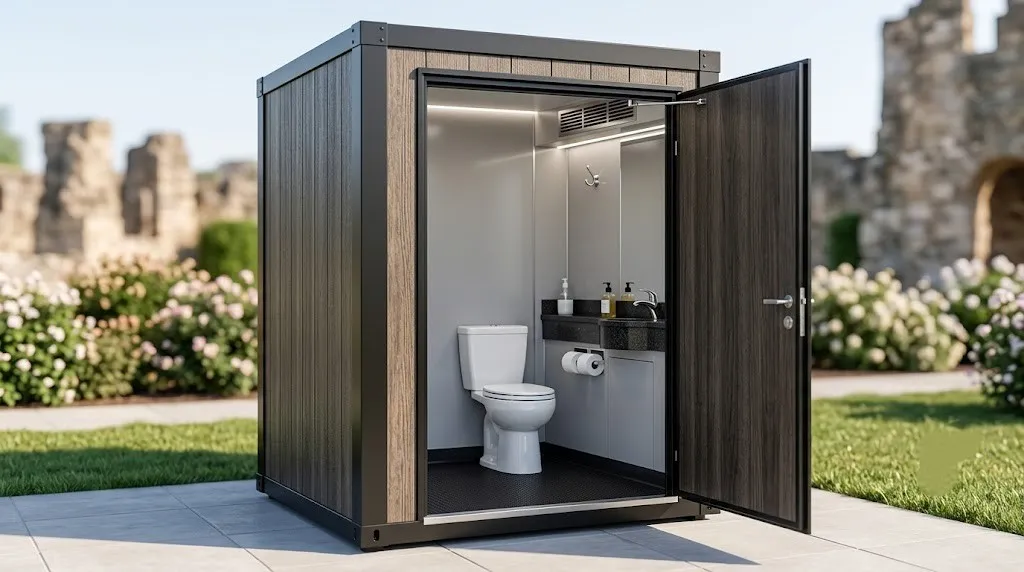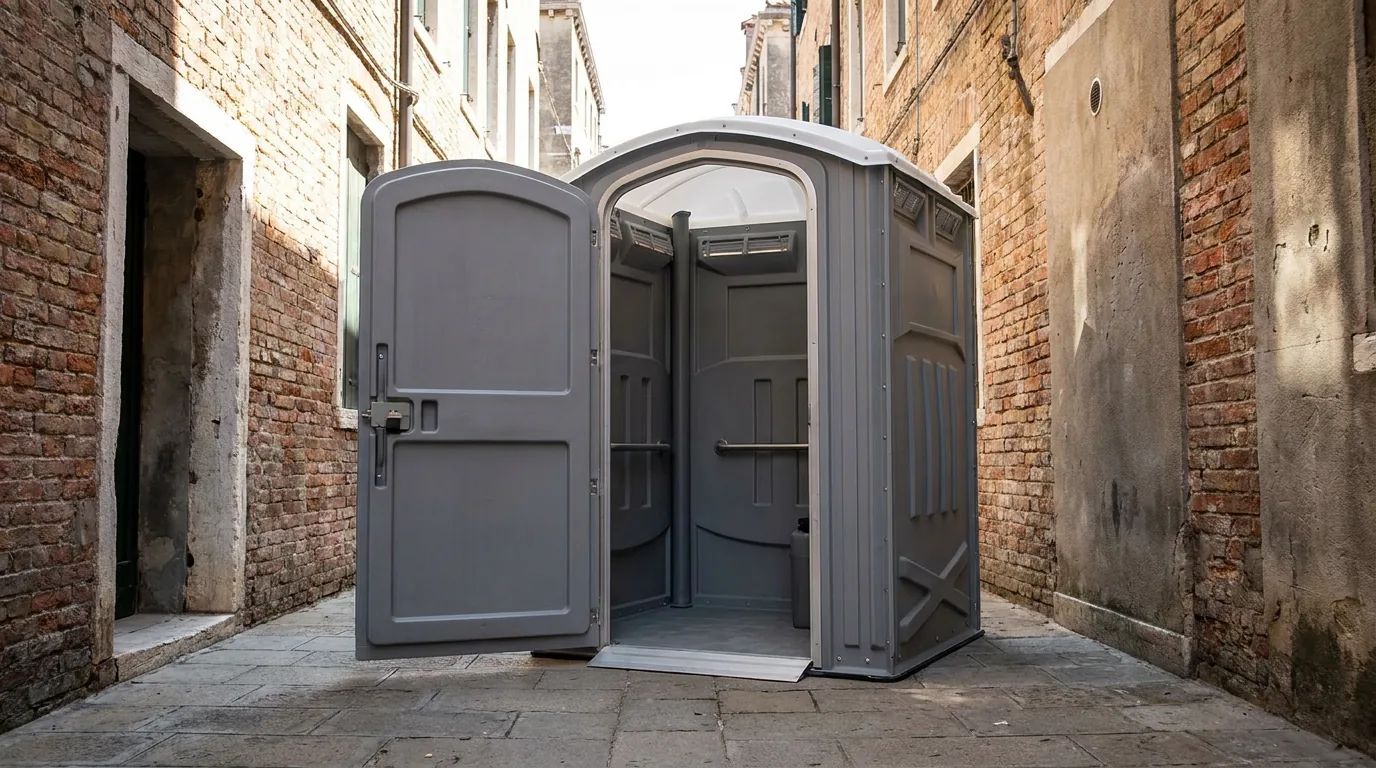
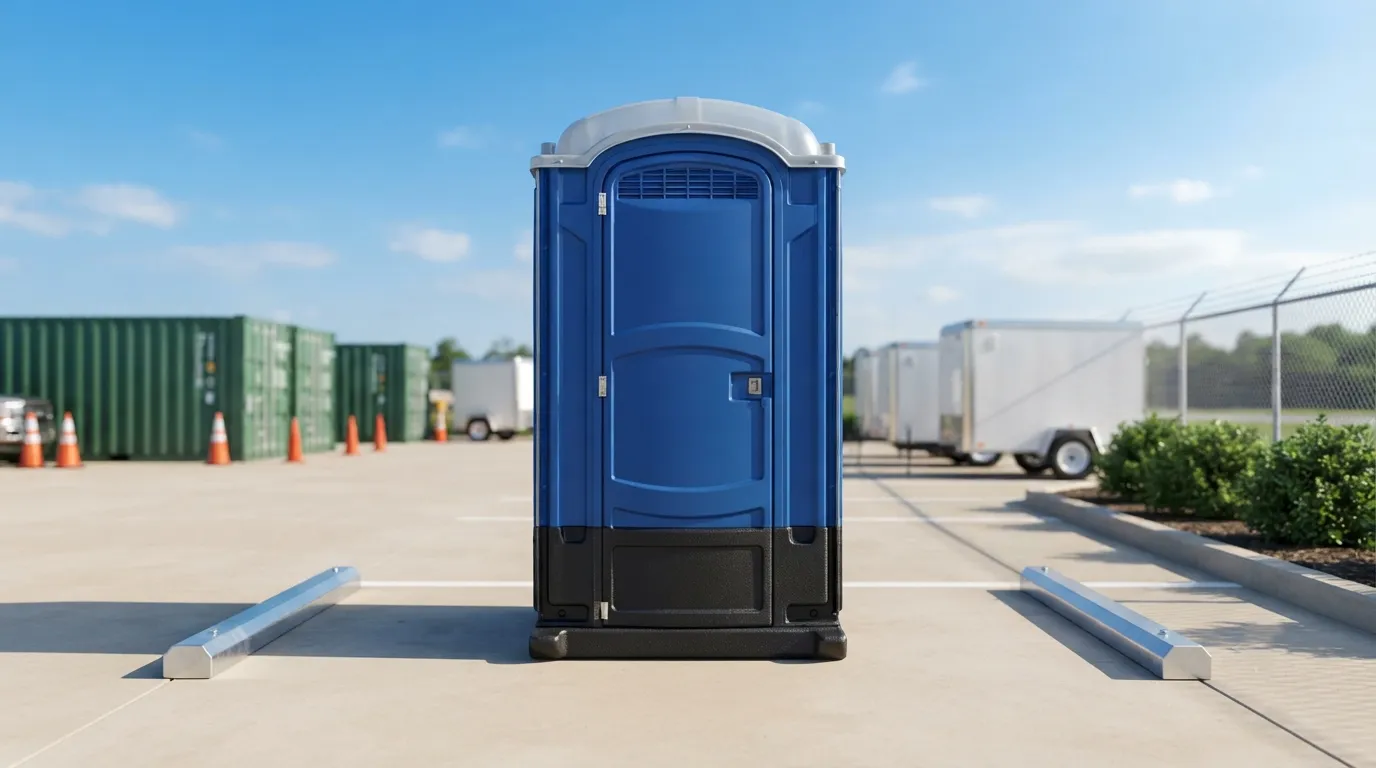
Standard porta potty
$125 to $250 a weekend
Toledo, OH
OSHA requires 1 toilet for every 20 construction workers on a Toledo jobsite, per 1926.51(c)(1). Crews of 20 to 199 need 1 toilet seat and 1 urinal per 40 workers. At 200 or more, the ratio drops to 1 per 50. Get the count wrong and inspectors notice fast.
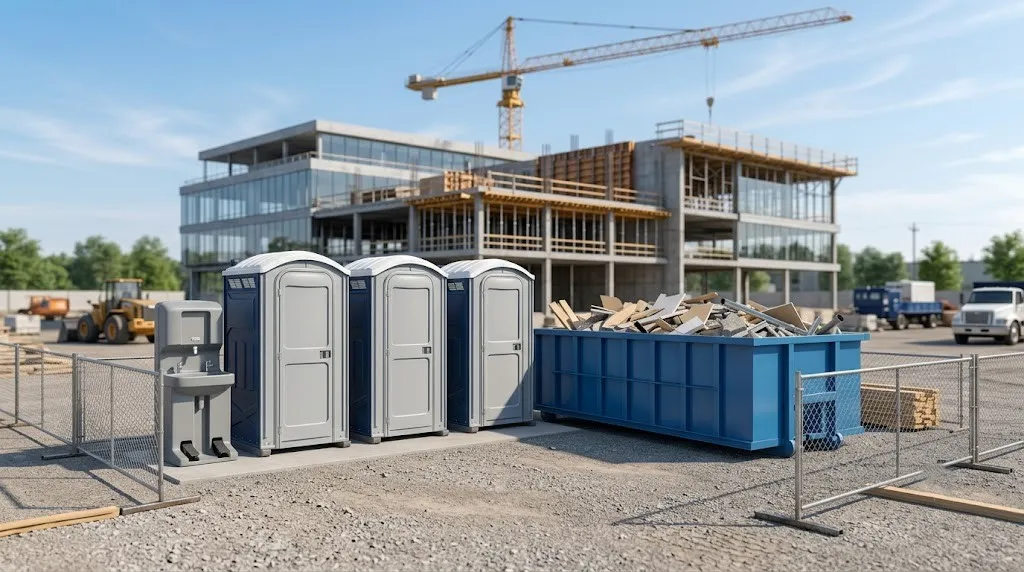
The math starts with headcount, not square footage. OSHA 1926.51(c)(1) sets the construction ratio: 1 unit for crews of 20 or fewer, then 1 toilet seat and 1 urinal per 40 workers as you scale past 20, dropping to 1 per 50 once you hit 200 workers. A Toledo general contractor running a 45-person crew needs at least two units under that table, and can compare options on the portable restroom rental page. If your site is not a construction project, general industry falls under 1910.141(c)(1)(i) instead, with its own headcount table. Either way, the unit count is a floor, not a target. Our how many porta potties do i need guide walks through peak headcount, shift overlap and break timing, since a crew that all breaks at noon needs more capacity than the same headcount spread across three shifts, a pattern our porta john rental page also touches on. Toledo Porta Pros sizes crews against both OSHA tables before quoting, and pairs unit counts with placement using the porta potty placement guide so distance from the work area does not become the next problem.
OSHA does not publish a hard walking-distance number for portable toilets the way some state plans do. What exists is 1926.51(c)(1) for unit count and 1926.51(a)(1), which requires an adequate supply of potable water at the jobsite. Cal/OSHA operates under its own state plan with distance language that does not apply in Ohio, so a Toledo contractor working from a Cal/OSHA portable toilet requirements construction checklist found online is reading the wrong rulebook. Practical placement still matters. ANSI/PSAI Z4.3, the industry service standard, sets a baseline of one service visit per week for up to 10 users across a 40-hour week, which means units far from the crew get skipped or overused between visits. Keep units close enough that a five-minute walk does not turn into a fifteen-minute one, which matters just as much on an emergency porta potty rental job as on a planned one. For sites spread across a large lot, our portable toilet rental team can split units into two or three clusters instead of one bank at the gate, and can quote a deluxe flushable porta potty for crews that want a step up.
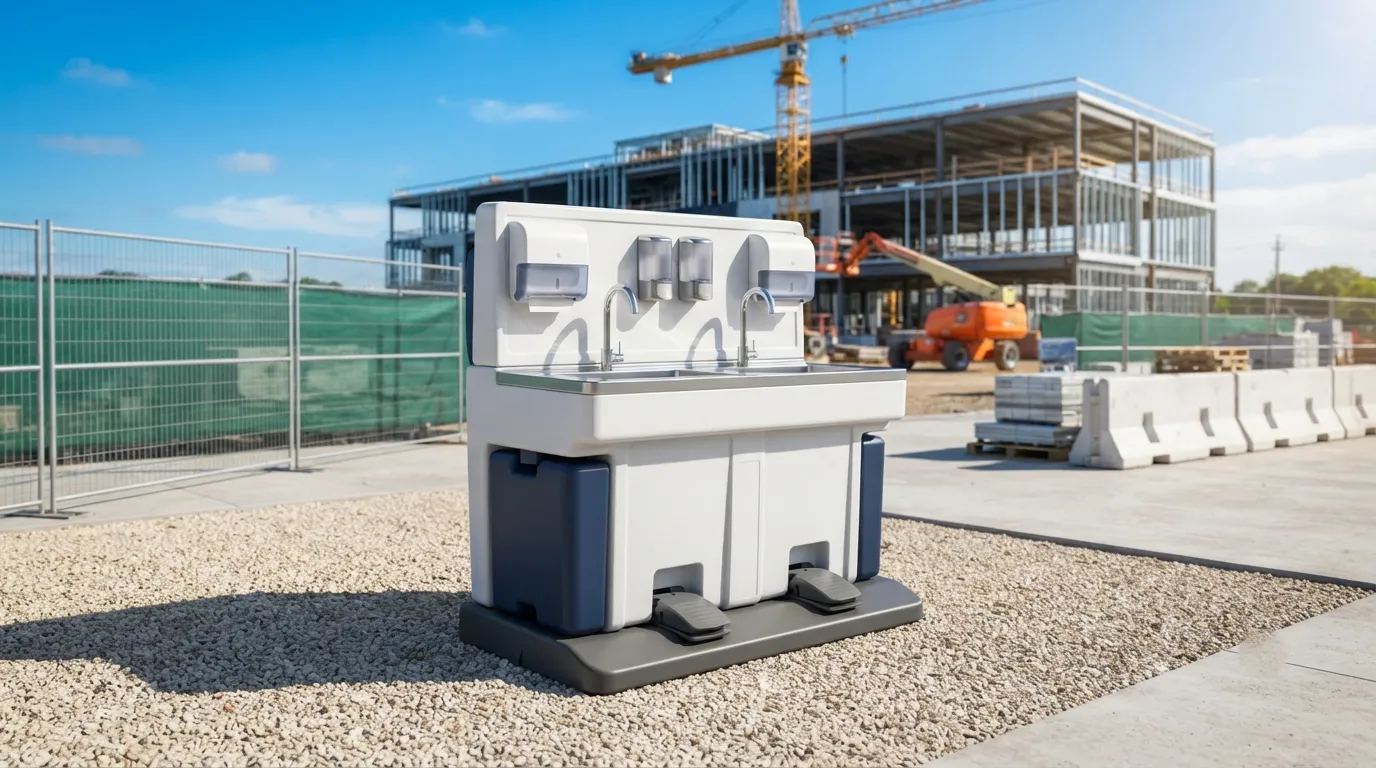
Yes, but only in specific situations, not as a blanket mandate. 1926.51(f)(1) requires washing facilities where employees apply paints, coatings, herbicides or insecticides, or work with other harmful contaminants. That is a narrow trigger, not a general handwashing rule for every jobsite. Separately, 29 CFR 1910.141(d)(2) requires soap and towels or a hand-drying device wherever washing facilities are provided; hand sanitizer alone does not satisfy it. Pair a handwashing station rental with your toilet order rather than assuming sanitizer covers you, or compare it against a hand sanitizer station rental to see what each one actually satisfies. ADA access follows a different set of standards. ADA 213.2 requires that at least 5 percent of clustered single-user units be accessible, never fewer than one. ADA 304.3.1 requires a 60 inch turning circle inside that unit, and 404.2.3 sets minimum door width at 32 inches. A Toledo event near downtown drawing a mixed public crowd, not just a fixed crew, should budget for an ada accessible porta potty from the start rather than adding one after a complaint, and check the ada restroom requirements page for the full standard, or the event restroom rental page for public-facing jobs generally.
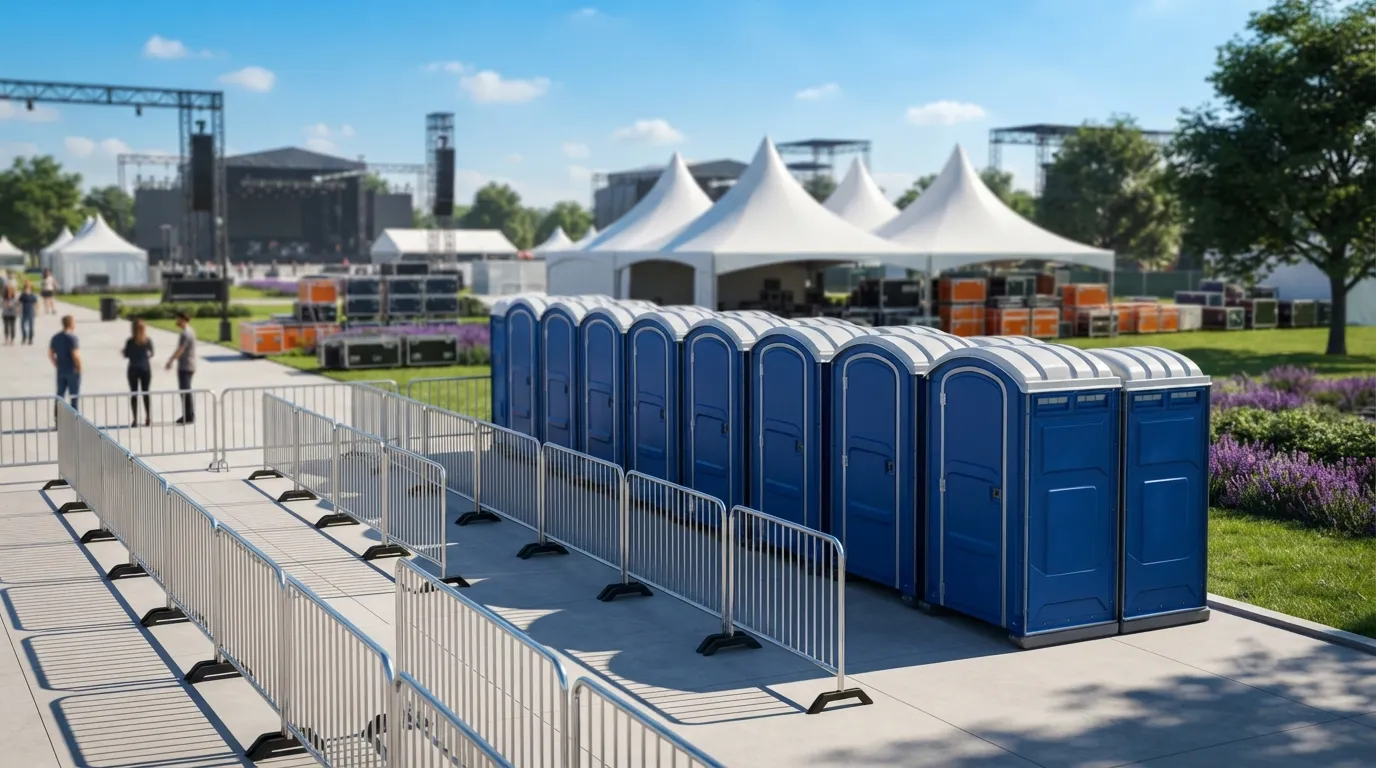
Agricultural hand-labor operations fall under a different standard entirely: OSHA 1928.110 requires potable water, toilets and handwashing within a quarter mile walk, at one facility per 20 employees. That is tighter walking-distance language than construction gets under 1926.51(c)(1), and it is worth knowing if your operation sits outside city limits toward Bowling Green, 24.7 miles south of Toledo, or out past Perrysburg, 13.4 miles south. Our farm and agricultural restrooms page covers that ratio in more detail, with driving distance to Bowling Green covered on our porta potty rental in bowling green oh page. For general industry sites that are not construction and not agriculture, such as a warehouse or a fixed manufacturing plant, 1910.141(c)(1)(i) applies instead, with its own headcount brackets. Sites running paint booths or chemical handling should also check 1926.51(f)(1) again, since coatings and solvents trigger the washing-facility requirement regardless of which toilet table applies. Toledo Porta Pros can help sort which standard governs your specific site before you order equipment, whether that means a construction dumpster rental alongside your toilets or a full look at construction site services.
Yes. Even a five-person crew falls under 1926.51(c)(1), which sets 1 toilet for every 20 workers as the baseline. There is no exemption for small crews, a point covered further on our osha portable toilet requirements hub and our general faq page. A single standard porta potty rental unit covers most crews under 20 comfortably for a short job.
No. Cal/OSHA is California's own state plan and does not apply in Ohio. Toledo sites follow federal OSHA 1926.51(c)(1) for construction toilet ratios. Anyone quoting Cal/OSHA numbers for an Ohio jobsite is using the wrong source, so it helps to confirm details directly through our contact page or start a request a quote with your actual crew size.
That depends on placement, and city rules need confirming directly with Toledo before delivery. Check our porta potty permit requirements page for what to ask about. Placing on private property away from the right of way usually avoids the question entirely, a distinction our porta potty placement guide walks through alongside our service areas page covering Sylvania and Maumee.
Daily rates for a standard unit run from about 100 to 350 dollars depending on job length and delivery distance. See porta potty rental per day for the full breakdown, or porta potty rental cost for weekly and monthly comparisons.
Not automatically. 1926.51(f)(1) only triggers washing-facility requirements for paint, coating, herbicide or insecticide work. Most general jobsites are not required to add a station, though many crews add one anyway. A portable sink rental satisfies 29 CFR 1910.141(d)(2) once soap and towels are included.
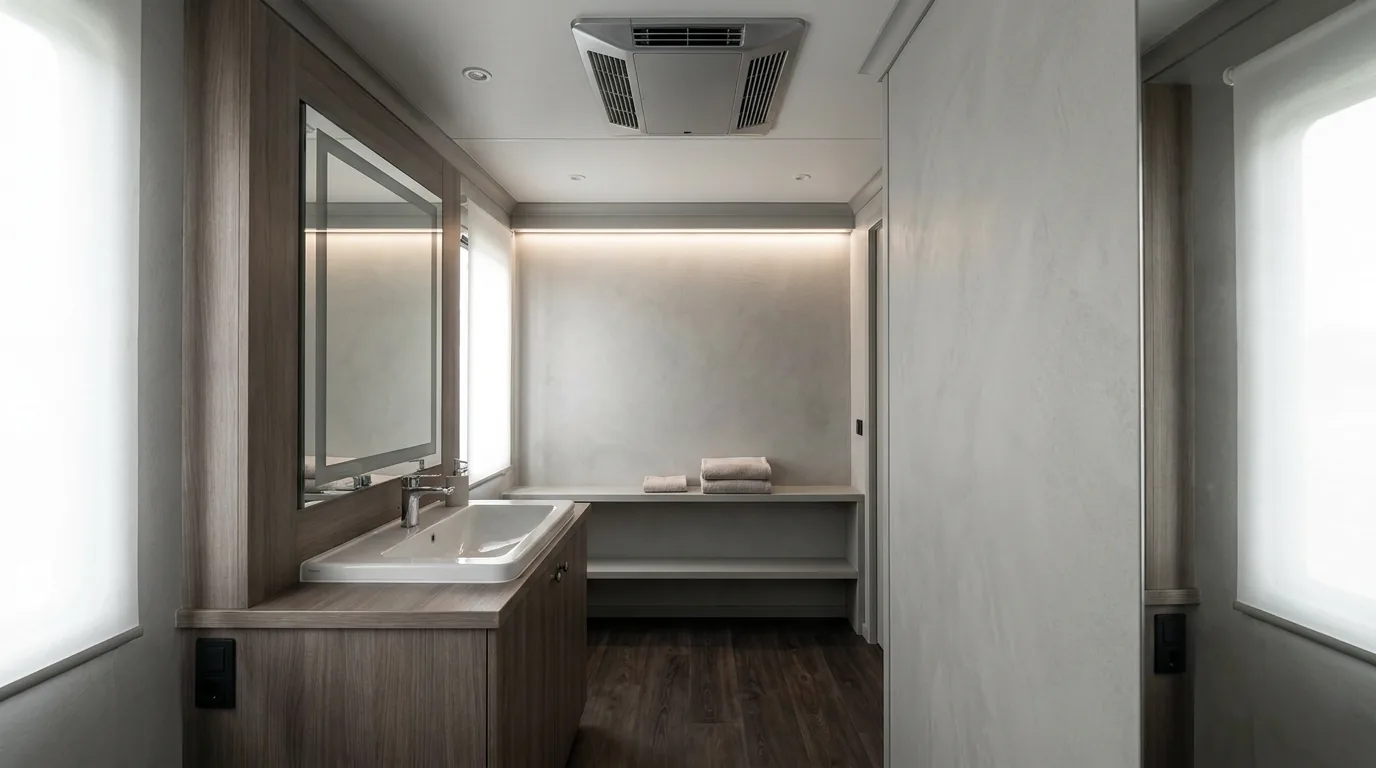
What we rent
Typical Toledo ranges, not a quote. Delivery is $50 to $150 and a weekly service visit $30 to $60. See the full cost breakdown.
$125 to $250 a weekend
$200 to $350 a weekend
$199 to $300 a weekend
Quoted by stall count
The rest of the yard
We deliver across Lucas County and the surrounding metro:
Next step
Tell us the address, the dates and the headcount. We size the order and confirm the route.